 Skip to content
 The Day My Mediport Failed
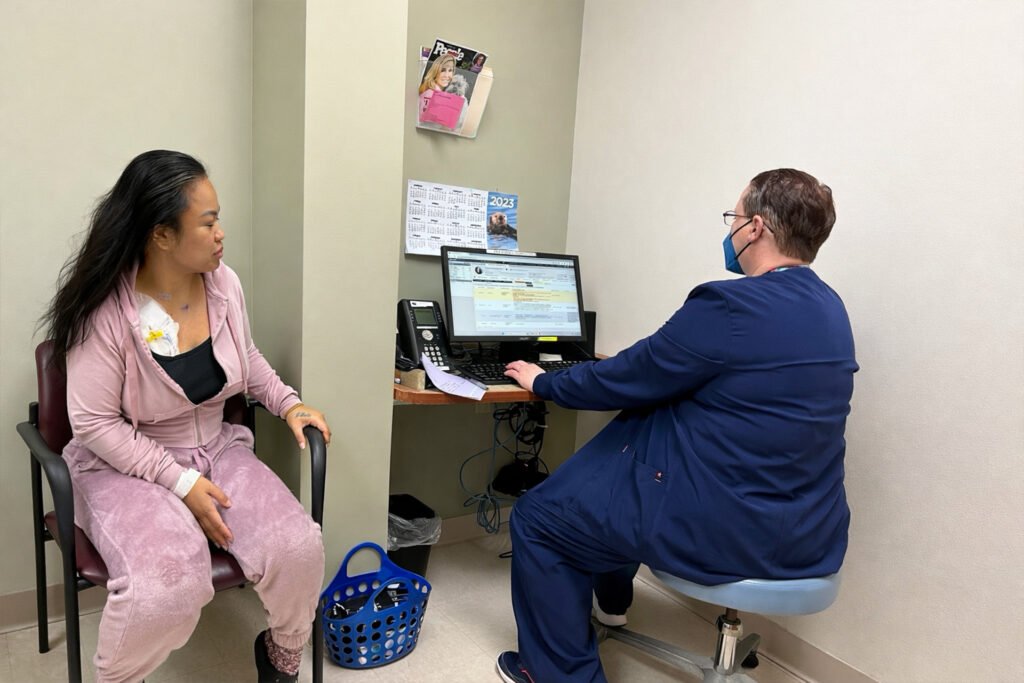
- Checking in for my 1st chemotherapy session and immunotherapy.
The mediport was supposed to make things easier. It was meant to spare my veins from repeated sticks, a simple device that would allow treatment to flow more smoothly. But within just one week of being implanted, it had already become infected. I had only used it for one chemo treatment before it turned into another battle of its own. That first treatment had also caused me to break out into hives, which meant that from that point forward the Benadryl they had once given me orally now had to be administered intravenously before every session.
They immediately brought me in to remove the infected mediport. The oncologist team’s plan was to let that side of my chest heal and then implant another mediport on the other side. But I quickly advocated for myself and refused. How could I trust that the same thing would not happen again? Instead, I spoke with my plastic surgeon, and he agreed to place a Peripherally Inserted Central Catheter (PICC) in my right upper arm.
Now the oncologist team worried that the PICC line would wear out and not be able to handle the amount of intravenous drugs I needed. Regardless of their concern, I was back two weeks later to have it placed. What was supposed to be a quick outpatient procedure—less than 30 minutes—turned into a two-hour ordeal. The doctor and his medical team struggled to find a large central vein to thread it into. Each failed attempt meant more lidocaine to numb the area, and if you have ever had lidocaine, you know it is painful.
At one point, the doctor admitted, “In all the years I have done this, there’s only one other time that a similar issue like this occurred, and that was over a decade ago.” I remember lying there, praying quietly, asking God to help the team find the vein. Eventually, they did. What was meant to be simple became another painful reminder that even the smallest parts of treatment can carry their own battles.
Reflection
The mediport and PICC line journey reminded me how quickly plans can change. What was designed to make things smoother became one of the most complicated and exhausting experiences of my treatment. Yet even in the frustration and pain, God met me. He reminded me that my voice mattered, that I could advocate for myself, and that I was never alone in the room.
Lesson
Setbacks and complications do not mean failure. They are reminders that healing takes many forms and that resilience sometimes looks like speaking up and choosing another way. Even when the process is prolonged and painful, God’s presence steadies us. His strength is revealed not in the absence of difficulty, but in His faithfulness to carry us through it.
Share
