Understand
Recognize the patterns influencing how you think, feel and move through everyday life.
 Skip to content
 Take your time. Your next step is waiting whenever you’re ready.
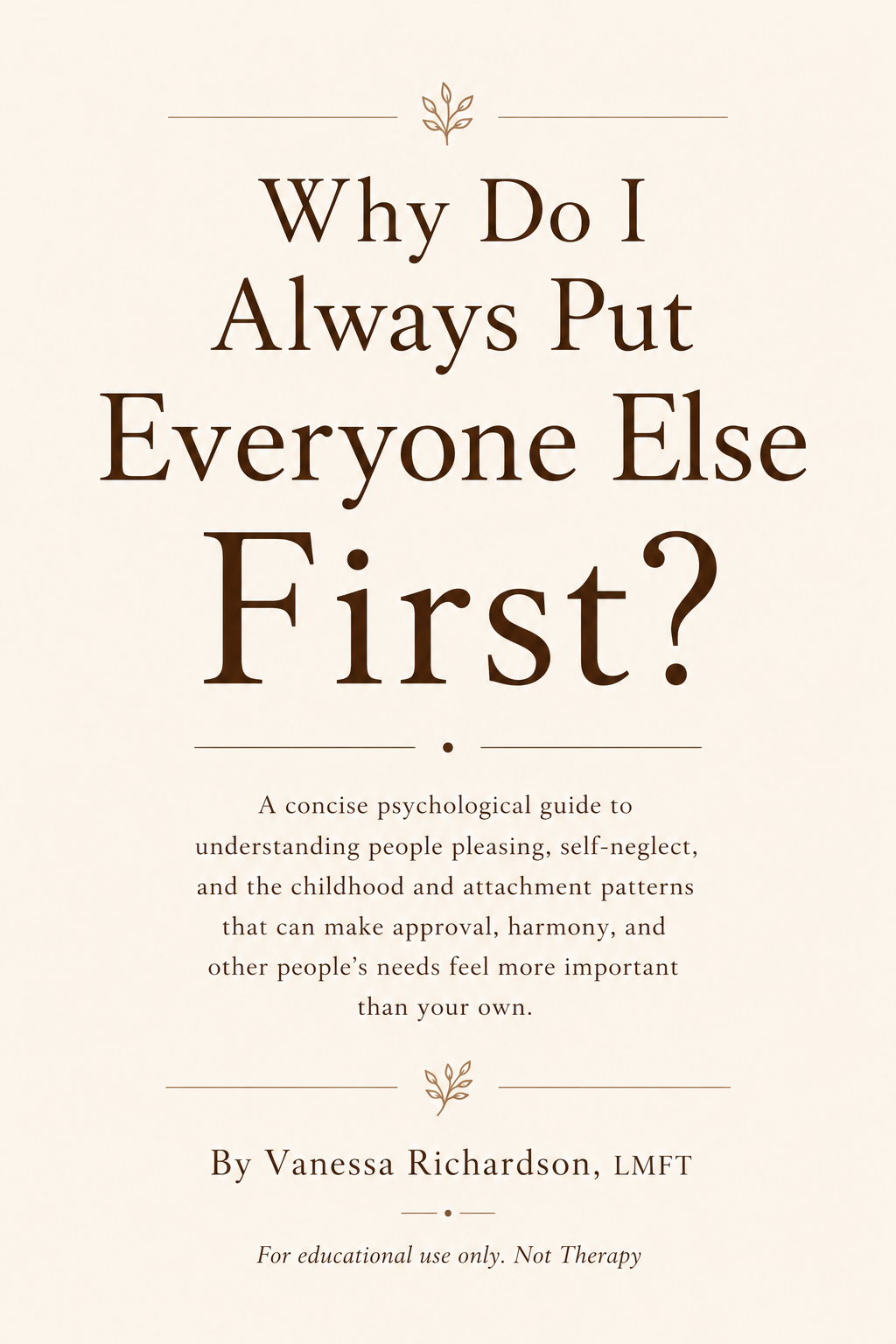
A concise psychological guide to understanding people pleasing, self-neglect, and the childhood and attachment patterns that can make approval, harmony, and other people’s needs feel more important than your own.
Do you find yourself saying yes when you really want to say no?
Do you worry about disappointing people, feel guilty for prioritizing yourself, or automatically consider everyone else’s feelings before your own?
Maybe you have become so accustomed to being accommodating, helpful, and easy to depend on that you are no longer sure where other people’s needs end and yours begin.
Why Do I Always Put Everyone Else First? is a compassionate psychological guide to understanding people pleasing, self-neglect, and the deeper patterns that can make approval, harmony, and other people’s needs feel more important than your own.
People pleasing is not always as simple as wanting everyone to like you.
Sometimes, keeping other people happy can become a way of creating safety.
You may have learned early to pay close attention to moods, avoid conflict, be agreeable, minimize your needs, or become the person who made things easier for everyone else.
Perhaps being helpful brought connection. Being agreeable prevented tension. Staying quiet protected a relationship. Or putting yourself last became so normal that you stopped noticing you were doing it.
Over time, those adaptations can follow you into adulthood—appearing in friendships, family relationships, romantic partnerships, and even the workplace.
This guide invites you to explore those patterns with curiosity rather than judgment.
This is not about becoming selfish.
It is about recognizing that caring for other people does not require disappearing from your own life.
You can be compassionate without always saying yes.
You can disappoint someone without abandoning them.
You can have boundaries and still be loving.
And your needs do not have to become important only after everyone else’s have been met.
Why Do I Always Put Everyone Else First? offers a thoughtful starting point for understanding why prioritizing yourself may feel so difficult—and how you can begin creating relationships where you do not have to neglect yourself in order to feel loved, accepted, or connected.
By Vanessa Richardson, LMFT
For educational use only. Not Therapy.
Recognize the patterns influencing how you think, feel and move through everyday life.
Create space to explore your experience with curiosity instead of judgment.
Consider new interpretations and create more intentional responses to challenges.
Turn awareness into small, sustainable shifts that support your everyday wellbeing.
Healing often begins when we stop trying to force change and start becoming curious about what our mind and body are trying to tell us.” A gentle reminder
 Optimized by Seraphinite Accelerator